Occupational safety in cleaning - challenges, solutions and health and safety standards
Occupational health and safety in the cleaning and facility maintenance sector is an area that requires particular attention and continuous improvement of procedures. Cleaning personnel face a wide range of hazards daily: exposure to chemical substances, the risk of slips and falls, physical strain resulting from lifting and repetitive movements, as well as work in environments with elevated sanitary requirements. Proper implementation of OHS principles not only reduces the number of accidents but also improves service quality and enhances the operational efficiency of cleaning companies.
In the daily work of cleaning staff, the most common hazards include:
Slips, trips, and falls – the risk increases due to wet surfaces, obstacles, and insufficient marking of wet areas.
Exposure to chemicals – proper use of cleaning agents, correct classification, and the use of appropriate protective clothing- minimizes the risk of irritation, burns, and allergic reactions.
Musculoskeletal strain – ergonomic selection of tools, carts, and transport techniques helps reduce musculoskeletal overload.
Biological and sanitary hazards – work in medical facilities, catering establishments, and sanitary environments requires strict adherence to protective and hygiene procedures.
Occupational accident statistics in 2025
According to current data from Główny Urząd Statystyczny and Państwowa Inspekcja Pracy, between January and September 2025, approximately 47,000 occupational accidents were recorded in Poland, representing a 3% increase compared to the same period in 2024. Among these incidents, 317 were classified as serious accidents, and 118 resulted in a fatality.
Although detailed statistics concerning accident rates specifically within the cleaning and facility maintenance sector are not widely published, international analyses indicate that the main causes of accidents in cleaning services include:
- 14% related to slips and trips
- 14% related to physical overexertion
- incidents and injuries resulting from contact with chemicals and other hazardous factors
Implementation of OHS principles in practice
These figures highlight the necessity of effective prevention and systematic OHS training for personnel. To reduce the risk of accidents and ensure compliance with procedures, companies operating in the cleaning sector should:
- Conduct regular OHS training sessions and workplace-specific instruction covering both chemical safety and workplace ergonomics
- Implement safe chemical management procedures, including product segregation, access to Safety Data Sheets (SDS), and appropriate personal protective equipment
- Organize work processes within facilities to minimize collisions and slip hazards
- Select ergonomic tools and equipment, such as height-adjustable carts and tools designed to reduce physical strain
Occupational safety in cleaning – a priority at Cleaning Expo
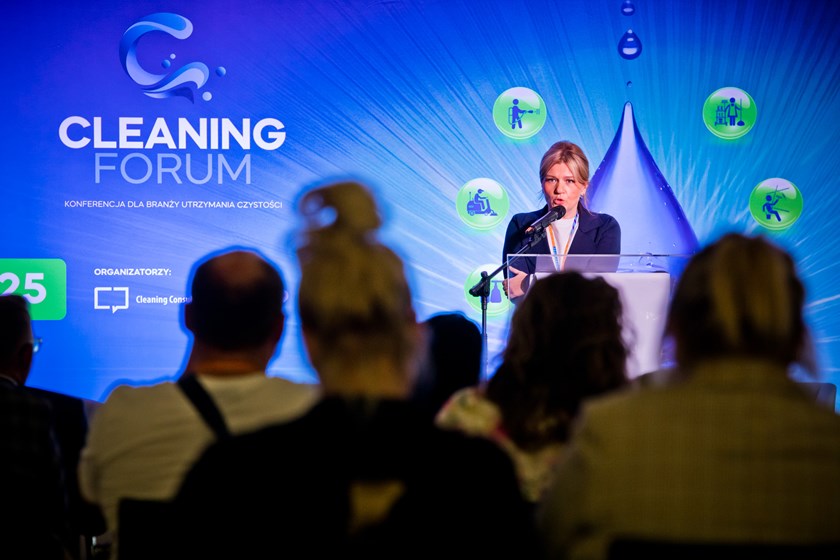
Cleaning Expo is one of the most important industry events in Poland, where occupational safety in cleaning services is regularly addressed within the substantive program of Cleaning Forum.
Last year, cooperation was established with Państwowa Inspekcja Pracy (PIP), enabling participants to familiarize themselves with current legal requirements and best OHS practices in the use of chemical agents. Eliza El Manouri, Senior Labour Inspector at PIP Poznań, delivered the lecture. Additionally, experts from the National Labour Inspectorate were present during the event, offering advice and consultations.
Occupational safety in the cleaning and facility maintenance sector is a complex and multifaceted area that requires continuous attention, staff education, and the application of modern OHS procedures. Statistical data and applicable regulations clearly demonstrate that proper work organization and systematic training produce measurable results, both in reducing accidents and in improving service quality. Cleaning Expo and the Cleaning Forum program constitute an important element of industry practice, promoting best standards and supporting companies in the everyday implementation of occupational safety principles.